Skip to content
Careers
Contact Us
  • Who We Are
    • About Amref Health Africa
    • Our Vision and Values
    • How we work
    • Our People
  • What We Do
    • Our Work
      • Water and Disease Prevention
      • Women and Girls
      • Health Worker Training
      • Health Innovations
      • Climate and Health
      • Social Determinants of Health
    • Where We Work
      • Across Africa
      • Amref in Ethiopia
      • Amref in Kenya
      • Amref in Malawi
      • Amref in South Sudan
      • Amref in Tanzania
      • Amref in Uganda
      • Amref in West Africa
      • Amref in Zambia
    • Our Impact
  • Newsroom
  • Get Involved
    • Donate
      • Make a Donation
      • Why donate to Amref?
    • Other ways to give
      • Gifts In Wills
      • Gifts in Celebration
      • Fundraise for Us
    • Other ways to support
      • Philanthropy
      • Corporate Partnerships
      • Trusts and Foundations
  • Who We Are
    • About Amref Health Africa
    • Our Vision and Values
    • How we work
    • Our People
  • What We Do
    • Our Work
      • Water and Disease Prevention
      • Women and Girls
      • Health Worker Training
      • Health Innovations
      • Climate and Health
      • Social Determinants of Health
    • Where We Work
      • Across Africa
      • Amref in Ethiopia
      • Amref in Kenya
      • Amref in Malawi
      • Amref in South Sudan
      • Amref in Tanzania
      • Amref in Uganda
      • Amref in West Africa
      • Amref in Zambia
    • Our Impact
  • Newsroom
  • Get Involved
    • Donate
      • Make a Donation
      • Why donate to Amref?
    • Other ways to give
      • Gifts In Wills
      • Gifts in Celebration
      • Fundraise for Us
    • Other ways to support
      • Philanthropy
      • Corporate Partnerships
      • Trusts and Foundations
Donate
Donate
  • Who We Are
    • About Amref Health Africa
    • Our Vision and Values
    • How we work
    • Our People
  • What We Do
    • Our Work
      • Water and Disease Prevention
      • Women and Girls
      • Health Worker Training
      • Health Innovations
      • Climate and Health
      • Social Determinants of Health
    • Where We Work
      • Across Africa
      • Amref in Ethiopia
      • Amref in Kenya
      • Amref in Malawi
      • Amref in South Sudan
      • Amref in Tanzania
      • Amref in Uganda
      • Amref in West Africa
      • Amref in Zambia
    • Our Impact
  • Newsroom
  • Get Involved
    • Donate
      • Make a Donation
      • Why donate to Amref?
    • Other ways to give
      • Gifts In Wills
      • Gifts in Celebration
      • Fundraise for Us
    • Other ways to support
      • Philanthropy
      • Corporate Partnerships
      • Trusts and Foundations
  • Who We Are
    • About Amref Health Africa
    • Our Vision and Values
    • How we work
    • Our People
  • What We Do
    • Our Work
      • Water and Disease Prevention
      • Women and Girls
      • Health Worker Training
      • Health Innovations
      • Climate and Health
      • Social Determinants of Health
    • Where We Work
      • Across Africa
      • Amref in Ethiopia
      • Amref in Kenya
      • Amref in Malawi
      • Amref in South Sudan
      • Amref in Tanzania
      • Amref in Uganda
      • Amref in West Africa
      • Amref in Zambia
    • Our Impact
  • Newsroom
  • Get Involved
    • Donate
      • Make a Donation
      • Why donate to Amref?
    • Other ways to give
      • Gifts In Wills
      • Gifts in Celebration
      • Fundraise for Us
    • Other ways to support
      • Philanthropy
      • Corporate Partnerships
      • Trusts and Foundations
Donate
  • Who We Are
    • About Amref Health Africa
    • Our Vision and Values
    • How we work
    • Our People
  • What We Do
    • Our Work
      • Water and Disease Prevention
      • Women and Girls
      • Health Worker Training
      • Health Innovations
      • Climate and Health
      • Social Determinants of Health
    • Where We Work
      • Across Africa
      • Amref in Ethiopia
      • Amref in Kenya
      • Amref in Malawi
      • Amref in South Sudan
      • Amref in Tanzania
      • Amref in Uganda
      • Amref in West Africa
      • Amref in Zambia
    • Our Impact
  • Newsroom
  • Get Involved
    • Donate
      • Make a Donation
      • Why donate to Amref?
    • Other ways to give
      • Gifts In Wills
      • Gifts in Celebration
      • Fundraise for Us
    • Other ways to support
      • Philanthropy
      • Corporate Partnerships
      • Trusts and Foundations
  • Who We Are
    • About Amref Health Africa
    • Our Vision and Values
    • How we work
    • Our People
  • What We Do
    • Our Work
      • Water and Disease Prevention
      • Women and Girls
      • Health Worker Training
      • Health Innovations
      • Climate and Health
      • Social Determinants of Health
    • Where We Work
      • Across Africa
      • Amref in Ethiopia
      • Amref in Kenya
      • Amref in Malawi
      • Amref in South Sudan
      • Amref in Tanzania
      • Amref in Uganda
      • Amref in West Africa
      • Amref in Zambia
    • Our Impact
  • Newsroom
  • Get Involved
    • Donate
      • Make a Donation
      • Why donate to Amref?
    • Other ways to give
      • Gifts In Wills
      • Gifts in Celebration
      • Fundraise for Us
    • Other ways to support
      • Philanthropy
      • Corporate Partnerships
      • Trusts and Foundations

February 5, 2025

It’s time to end FGM/C

Picture of Hope Ahipeaud

Hope Ahipeaud

Cynthia speaks from experience

As a 14-year-old Maasai girl, Cynthia was forced to undergo female genital mutilation (FGM/C) herself.

Now, she’s devoted her life to fighting for women’s rights and eradicating this harmful practice once and for all.

Read more: What is FGM/C?

A happy childhood cut short by FGM/C

“I had a happy childhood,” she recalls. “My village felt like one big family. But one day, everything changed. I was washing dishes when my aunts appeared, held me down, and [cut] me. My parents, who are strongly against this practice, weren’t home—and my aunts knew it.”

When her parents returned and learned what had happened, they were outraged, but felt powerless. Their only option was to protect their daughter from being pressured into marriage.

“They sent me to boarding school,” Cynthia says. “In our village, they were alone in thinking that girls shouldn’t be [cut] and married off, so school was my escape.”

For a while, Cynthia found some peace at school. She even managed to bury her traumatic memories—until a teacher asked her to speak about [experience of being cut] in class.

“It brought everything rushing back,” she says. “I became depressed and even considered taking my own life.”
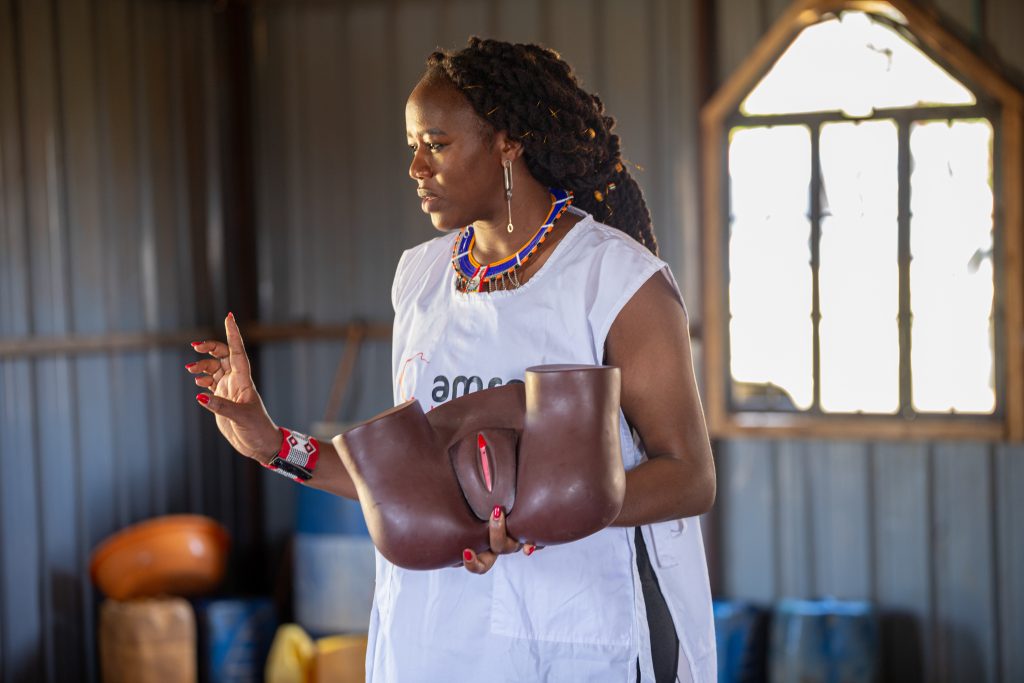
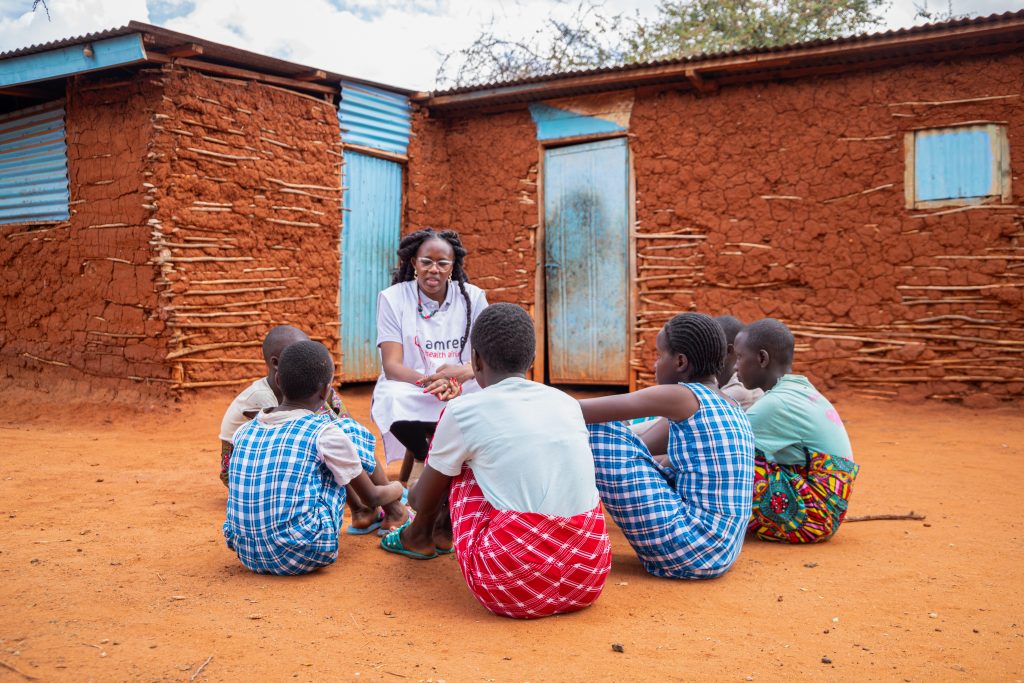
Cynthia Oningoi Simantoi (31) holds an FGMC awareness session using a dummy for demonstration with some of the women of Maparasha community.

The turning point: from FGM/C survivor to champion

The turning point came in 2009 with the birth of Cynthia’s sister. “Suddenly it hit me—this could happen to her, too. I thought, enough is enough.”

With support from Amref, Cynthia became a champion of an alternative rite of passage for young girls, a ceremony that honours tradition without the violence of cutting.
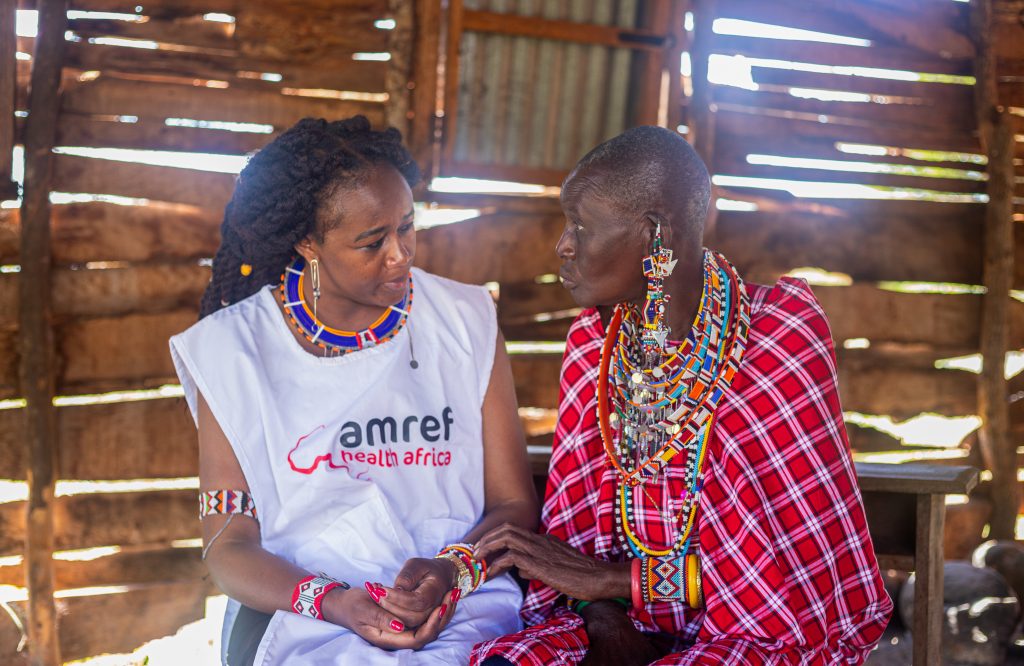
Building trust to end FGM/C

She’s learned to approach this issue with care and sensitivity. “You can’t just show up and demand change,” she explains.

“We start by helping communities with things they need, like clean drinking water. That builds trust and respect. Only after that trust is established can we begin talking about something as delicate as ending FGM/C.”

When asked if she’s hopeful, Cynthia’s eyes brighten. “Absolutely. More girls are learning about their rights and speaking up. More young men are joining us, too. I’m hearing things like, ‘Of course I’ll stand up for my sisters and marry a girl who’s not circumcised.’ Those voices are growing stronger.”

Cynthia's powerful message

Before she leaves, Cynthia delivers one final, powerful message. “Never underestimate what you can do,” she says. “Use your voice. Many of you already do, and I’m grateful for that. If we join hands, we can end female genital mutilation—together.”

Watch Cynthia deliver her message

Cynthia Oning’oi is an end FGM/C advocate working with Amref Health Africa in Kajiado, Kenya. She works with Maasai communities where she is from, to help them transition to alternative ways to mark a girl’s rite of passage to womanhood. Her work is helping to save girls from the pain and trauma of the cut.
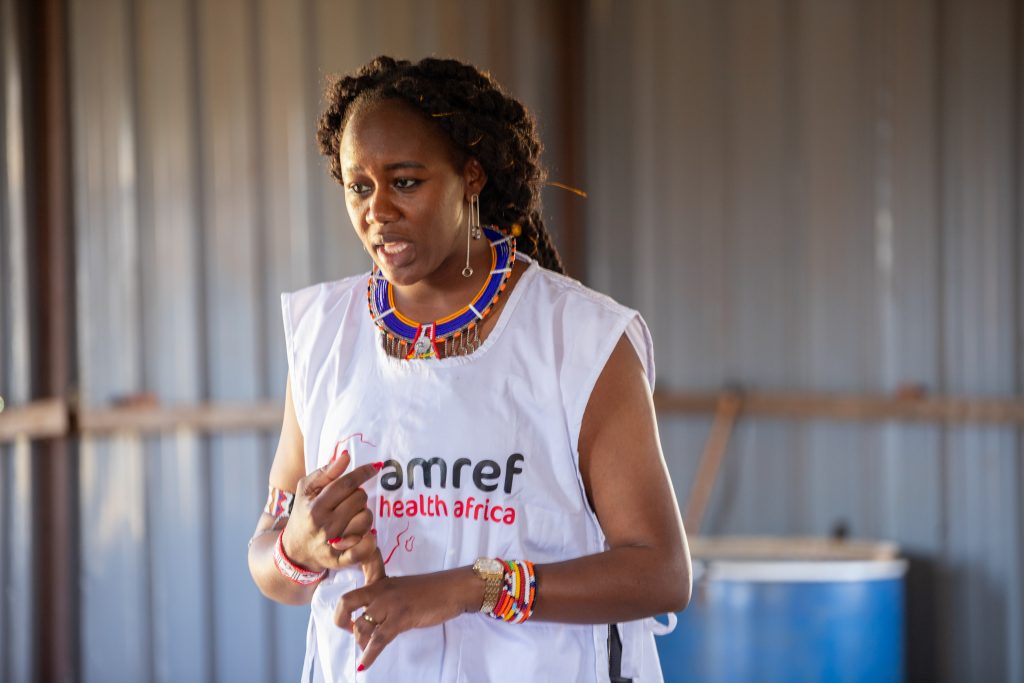
Watch Cynthia's message

Related Articles

Announcements, Uncategorised

|

Amid uncertainty, there is hope

Read Article
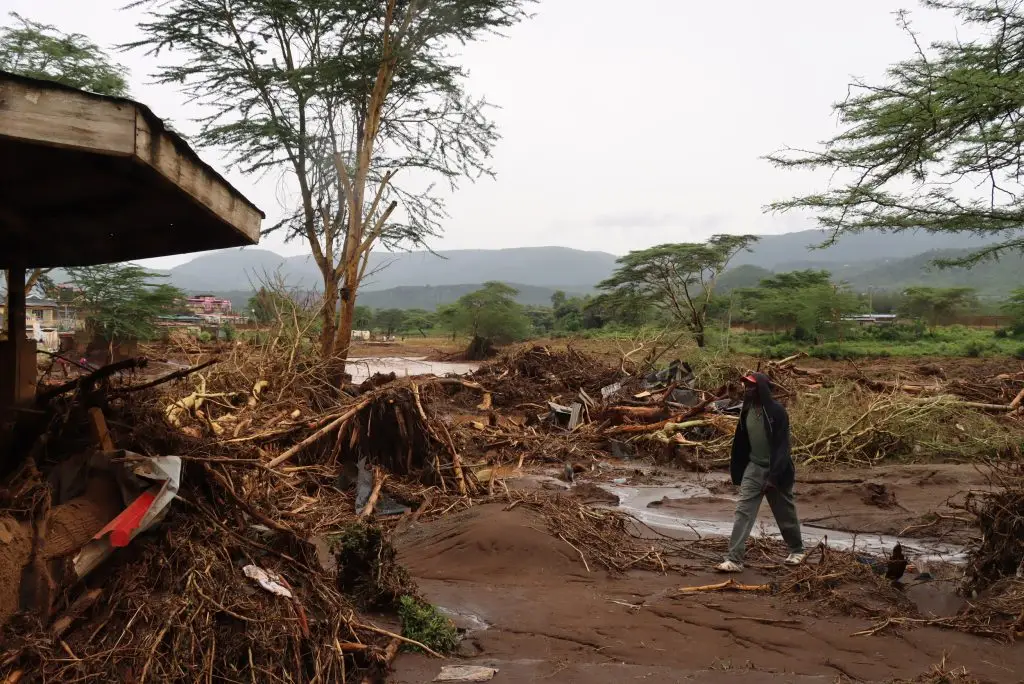
Destruction in the aftermath of devastating floods in Nairobi, Kenya in 2024 (c) Amref Health Africa/Linda Mwendwa Kariuki

Health & Climate Change

|

From Loss and Damage to Health and Justice

Read Article

Social Determinants of Health

|

Amref point of view: Africa’s Pivot Moment on NCDs

Read Article

Health Innovations

|

Youth for Tobacco-Free Futures

Read Article

Women & Girl’s Health

|

Knowledge + Skills = Power

Read Article

Amref Health Africa is Africa’s
leading health NGO, working with communities in 35
countries to secure the right to health and break the cycle of poverty.

Registered charity no. 261488 (England & Wales)
Company no. 00982544

Donate Now

Contact Us

Accessibility Statement

Privacy & Cookie Policy

Terms & Conditions

Get in touch

Canopi, 82 Tanner Street, London, SE1 3GN
020 7269 5520
info@amrefuk.org

Follow us on
Facebook Twitter Linkedin

© 2025 Amref Health Africa UK. All rights reserved.

#Kijana ChatBot

✕